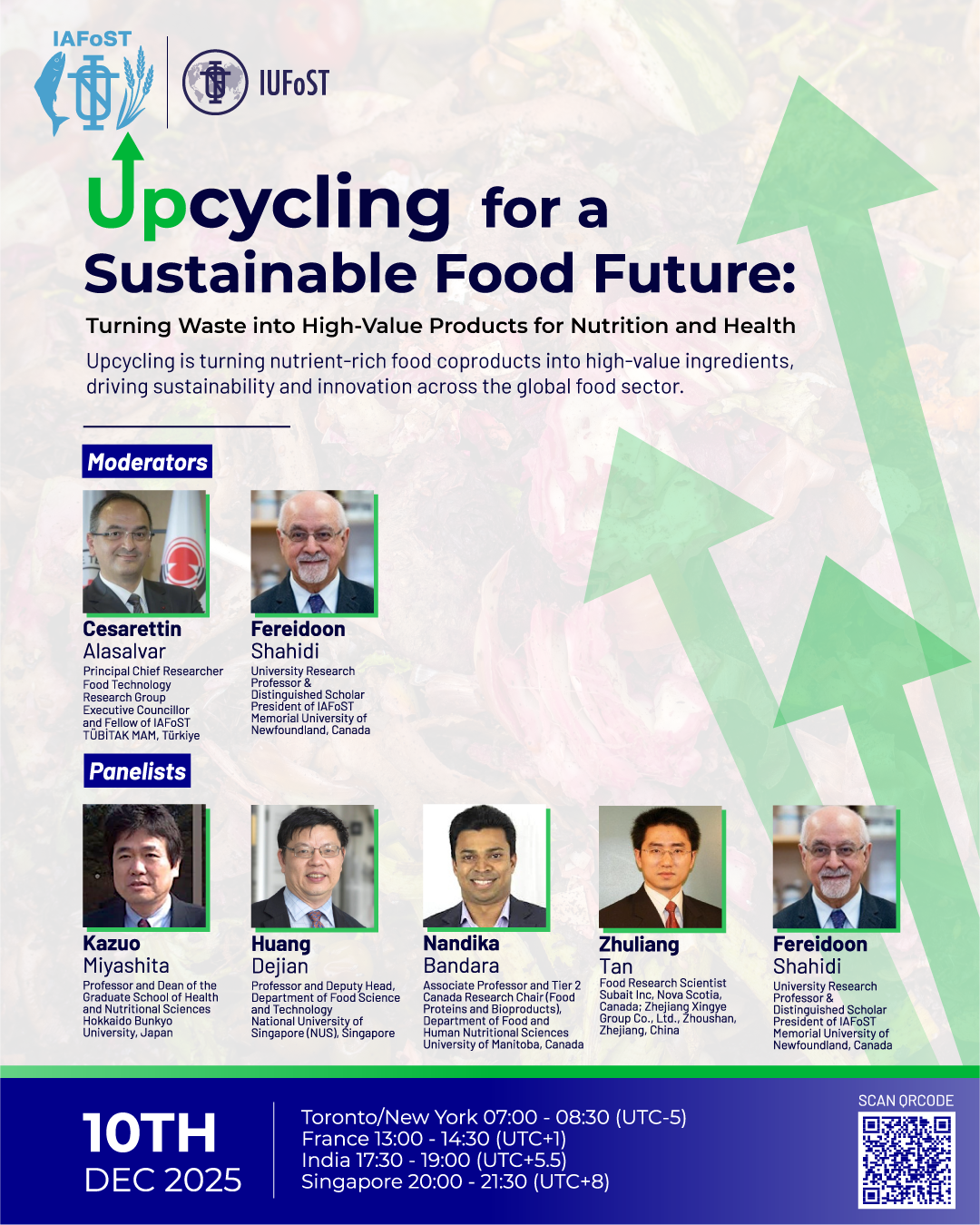
Food processing offers significant benefits - from improving safety and extending shelf life to enhancing nutrition and reducing waste. One powerful example is upcycling, which transforms co-products from agriculture, fisheries, and food manufacturing into high-value nutritional components. Upcycling is now being accelerated by innovative technologies that help convert nutrient-rich materials into functional ingredients, supporting both improved nutrition and a more sustainable, circular food system.
Upcycling and zero-waste food processing are transforming how we think about leftovers from farms, fisheries, and food production. Instead of letting nutrient-rich coproducts go to waste, new sustainable technologies – such as smart fermentation, gentle extraction methods, and innovative biotransformation - can turn them into valuable ingredients for healthy foods, supplements, and even animal feed. These materials often contain proteins, fibres, beneficial fats, and powerful bioactive compounds. By reclaiming them, we not only reduce landfill use and environmental impact but also strengthen food security, support local economies, and move closer to a truly circular food system. World-leading experts will explore these opportunities and challenges in an upcoming scientific roundtable - highlighting how upcycling can unlock both sustainability and innovation in the global food sector.
At the upcoming Scientific Roundtable, panelists from Canada, Japan, Singapore, and China will discuss global opportunities and challenges in advancing upcycling practices - from agricultural and food-processing coproducts to marine resources - highlighting how these approaches can drive sustainability and innovation across the food sector.